
Quick Answer
A small blue spark when you plug something in can be normal — it’s the brief arc as contacts meet. But a spark that lingers, makes a popping or buzzing sound, throws yellow or white sparks, leaves scorch marks, or comes with a burning smell is a warning of a loose connection, damaged wiring, or a failing outlet. If you see any of those, stop using the outlet, switch off its breaker, and call a licensed electrician. If you see smoke or flame, leave and call 911.
Key Takeaways
- A brief blue spark as a plug makes contact can be normal; a lingering, loud, or discolored spark is not.
- Warning signs are yellow or white sparks, a popping or buzzing sound, scorch marks, heat, or a burning smell at the outlet.
- Dangerous sparking usually traces to a loose connection, damaged wiring, or a worn-out receptacle — an arcing fault that can start a fire.
- The safe response is to stop using the outlet, switch off its breaker, and call a licensed electrician; if there’s smoke or flame, leave and call 911.
- Caught early, a sparking outlet is a straightforward repair — the danger is in continuing to use a circuit that’s arcing.
A brief, small blue spark at the moment you plug something in can be normal — it’s the quick arc that happens as electrical contacts meet and current jumps the last tiny gap. That kind of spark is fast, contained, and unremarkable, and it doesn’t repeat once the plug is seated. What isn’t normal is a spark that lingers, that throws yellow or white light, that pops or buzzes, or that leaves any mark behind. The difference between the two is the whole point of this article, because one is routine and the other is a fire risk telling you to stop.
Is it normal for an outlet to spark?
The dangerous kind of sparking is usually arcing — electricity jumping across a gap it shouldn’t, generating intense heat that can ignite nearby material. Arcing comes from loose connections, damaged wiring, or a worn receptacle whose internal contacts no longer grip properly. This is exactly the hazard that arc-fault protection in modern electrical codes is designed to catch. The Electrical Safety Foundation International ties arcing faults to home electrical fires, which is why a sparking outlet with any of the warning signs deserves prompt attention rather than a shrug.
Arcing is electricity jumping across an unintended gap — from a loose or damaged connection — producing intense, localized heat that can ignite surrounding material and start a fire.
Why arcing is the spark that matters
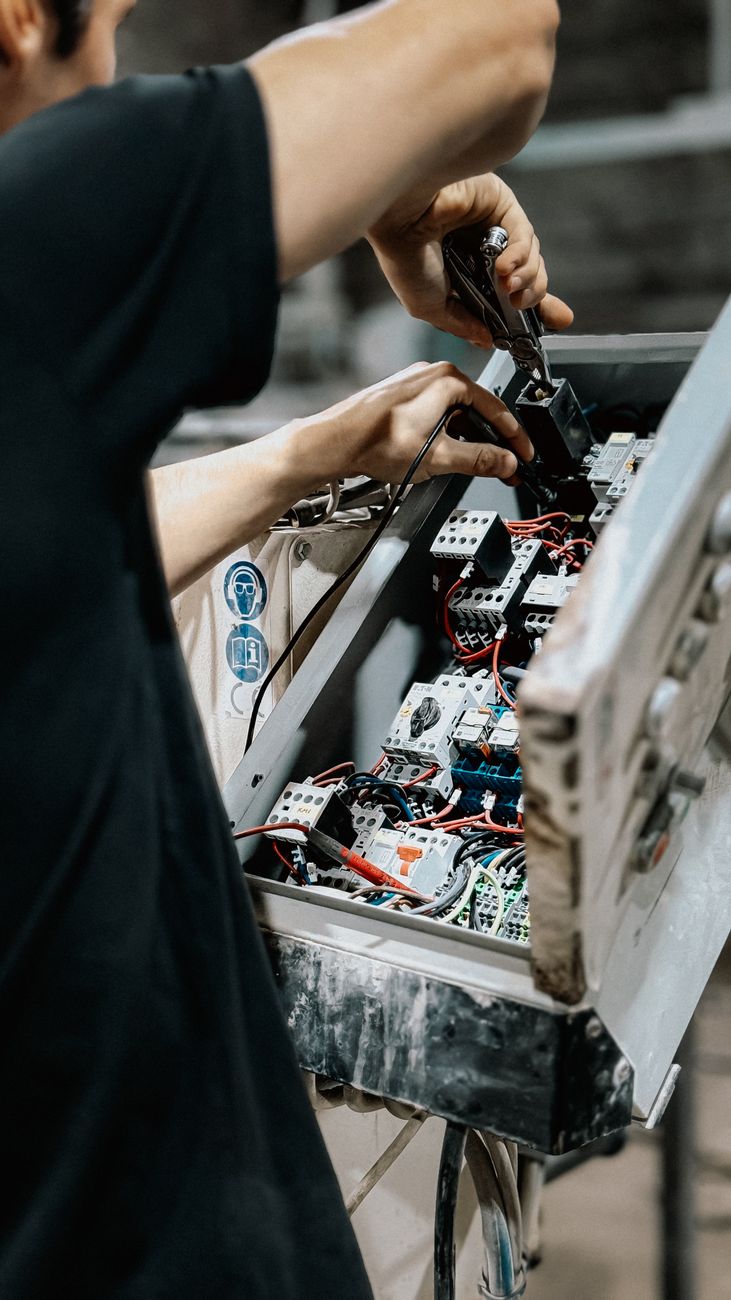
In Marin’s older homes — across Novato, San Rafael, and the long-owned houses of San Anselmo and Fairfax — outlets and wiring that have been in service for decades are more prone to the loose connections and worn contacts that cause arcing. Add the everyday habit of plugging and unplugging heaters, chargers, and appliances, and a marginal receptacle can finally start to spark. It’s not cause for panic, but it is cause to stop using that outlet and get it looked at. If the outlet is also giving off a burning smell, our guide to a burning smell near an outlet covers that closely related hazard.
A receptacle (outlet) is the plug-in device on a circuit; as its internal contacts wear or its connections loosen, it can begin to arc and spark when a plug is inserted or under load.
How do you know if a sparking outlet is dangerous?
You know a sparking outlet is dangerous when the spark is anything other than a quick blue flash at plug-in: yellow or white sparks, a spark that lingers or repeats, a popping, buzzing, or crackling sound, scorch marks around the slots, heat, or a burning smell. Any one of those signals arcing or overheating rather than a harmless contact spark. A single fast blue spark that never repeats is usually fine; the warning signs stack the other way. Knowing which you’re seeing tells you whether to keep going or stop and cut the power.
The signs that mean stop and call 911
Some signs move a sparking outlet from urgent to emergency: visible flame, smoke from the outlet or wall, sparks that shower or don’t stop, or a faceplate too hot to touch. If you see any of those, don’t investigate — leave the area and call 911 first. Fire can travel inside a wall faster than you’d expect, and no outlet is worth staying to inspect once it’s actively failing. Once you’re safe, call the fire department, then a licensed electrician. If switching off the circuit breaker is quick and safe on your way out, do it — but never let it delay leaving.
A quick blue flash is contacts meeting. A lingering, loud, or scorching spark is the outlet asking you to stop.— Towery Electric
What causes an outlet to spark dangerously?
An outlet sparks dangerously because of arcing, which traces back to a few causes: a loose wire connection, damaged or deteriorated wiring, a worn-out receptacle, or moisture reaching the outlet. Each creates the conditions for electricity to jump a gap and generate heat where it shouldn’t. As with an overheating outlet, diagnosing which one is at play isn’t a homeowner’s job — that’s the inspection’s role — but understanding the categories helps you describe what you’re seeing. The table below lays out the common causes and what each typically involves.
These causes often connect to broader circuit problems. A loose connection that sparks can be the same fault that trips a breaker or overheats an outlet; moisture in an outdoor or bathroom receptacle points to a missing or failed GFCI. According to the U.S. Consumer Product Safety Commission, faulty wiring and worn receptacles are recurring contributors to home electrical incidents, which is why a licensed electrician checks the circuit behind the outlet rather than only swapping the visible device.
| Likely cause | What's happening | Typical fix |
|---|---|---|
| Loose connection | A wire has backed out of its terminal, allowing electricity to arc | Re-terminate the connection or replace the receptacle |
| Worn-out receptacle | Internal contacts no longer grip the plug, causing arcing on insertion | Replace the outlet with a new, code-compliant one |
| Damaged wiring | Deteriorated or overheated insulation exposing conductors | Repair or replace the affected wiring section |
| Moisture intrusion | Water reaching an outlet, especially outdoors or in baths | Correct the source and install proper GFCI protection |
What should you do when an outlet sparks?
When an outlet sparks with any warning sign, act in this order: stop using the outlet, switch off the breaker for that circuit, don’t plug anything back in, and call a licensed electrician. If you see smoke or flame at any point, skip to leaving the home and calling 911. These steps de-energize the arcing circuit and keep you from feeding a fault that could ignite. They’re calm, deliberate actions — not a scramble — as long as the situation hasn’t reached visible smoke or fire. A quick blue spark with no other signs doesn’t require this; the warning signs do.
- Stop using the outlet. Unplug what’s connected if you can do so safely, and don’t use the outlet again until it’s inspected.
- Switch off the breaker. Go to the panel and turn off the breaker for that circuit to cut power to the sparking outlet.
- Leave it off — don't test it. Keep the circuit off and resist plugging back in to ‘see if it still sparks.’ Reusing an arcing outlet risks a fire.
- Call a licensed electrician. Describe what you saw — spark color, sound, marks, smell. Same-day service is appropriate for a sparking outlet.
If the spark was a lone blue flash and everything else is normal, you likely don’t need any of this — that’s an ordinary contact spark. But if there were scorch marks, a sound, a smell, or a lingering spark, work the list and get a professional out. When our electrician arrives, the work starts by cutting power, opening the box to find the fault, and confirming the rest of the circuit is sound before restoring power. If that same circuit has also been tripping, our guide on a breaker that keeps tripping explains what the overlap can mean.
Outlet throwing sparks? Cut the breaker and let's take a look.
Request Your EstimateWhen should you call an electrician versus 911?
Call 911 first when a sparking outlet produces smoke, flame, or showering sparks that won’t stop; call a licensed electrician the same day when the sparking has warning signs but no active fire. That’s the line. 911 is for a fire risk already in progress, where your first job is getting people out. An electrician is for correcting the arcing fault before it reaches that stage — which is where most sparking-outlet calls land, caught early. Knowing which situation you’re in keeps the response proportional: scheduled repair versus immediate evacuation.
Why you shouldn't keep using a sparking outlet
You shouldn’t keep using a sparking outlet because arcing faults tend to worsen, not resolve, the more the circuit is used. The loose connection doesn’t retighten; the worn receptacle doesn’t heal. Each use of an arcing outlet is another chance for the heat to ignite the wiring insulation or surrounding material. That’s why we treat a sparking outlet as a same-day priority rather than a someday fix. If the sparking is at your panel rather than an outlet, that’s its own emergency — our guide to a buzzing electrical panel explains why panel-level warnings warrant an immediate call.
What are the common mistakes people make with a sparking outlet?
The most common mistake is assuming every spark is normal and continuing to use an outlet that’s actually arcing. The quick blue flash at plug-in lulls people into ignoring the yellow, lingering, or noisy sparks that mean something’s wrong. Another frequent error is resetting the breaker and plugging back in to test it — feeding the exact fault that’s sparking. Fire-safety authorities like the U.S. Fire Administration tie residential electrical fires to arcing and faulty wiring that gave warning signs first. Letting an unlicensed handyman swap the outlet without checking the circuit rounds out the usual problems.
How to handle it the right way
Handle a sparking outlet by cutting power to the circuit, leaving it off, and bringing in a licensed C-10 electrician who checks the whole circuit rather than just replacing the visible outlet. The receptacle is often the symptom, not the cause — a loose connection upstream can keep arcing at a brand-new outlet if the underlying fault isn’t found. Modern arc-fault protection can also help guard against these faults, and a good electrician will tell you whether your circuit would benefit. If the outlet has also gone dead, our guide to a dead outlet in one room covers what else may be happening on that circuit.
Key Terms
- Arcing
- Electricity jumping across an unintended gap, producing intense heat that can ignite nearby material — the dangerous kind of sparking.
- Contact spark
- The brief, harmless blue flash that can occur as a plug's contacts meet an energized outlet; it doesn't linger or repeat.
- Receptacle (outlet)
- The plug-in device on a circuit; worn contacts or loose connections can cause it to arc and spark.
- AFCI (arc-fault circuit interrupter)
- A protective device that detects dangerous arcing in a circuit and cuts power to help prevent electrical fires.
About the Author

Founder of Healthcare Marketing Group and author of The Ultimate Guide to Digital Marketing. Previously led a digital marketing company with 8,000+ clients. Writes on local-service SEO and E-E-A-T content strategy.
Reviewed By

Alex founded Towery Electric in Novato in 2014 and has responded to sparking-outlet calls across Marin’s older neighborhoods. Reviewed this article for technical accuracy on Sep 16, 2026, 2026.
“The blue flash when you plug in a vacuum? Usually nothing. Yellow sparks, a pop, a scorch mark? Kill the breaker and call. The trick is knowing the difference — and when in doubt, treat it as the serious kind.”
— Alex Towery, Licensed Electrical Contractor
How We Ensure Accuracy
Sources
- Electrical Safety Foundation International. “Arc Faults and Home Electrical Fires.” esfi.org
- U.S. Consumer Product Safety Commission. “Home Electrical Safety.” cpsc.gov
- U.S. Fire Administration. “Electrical Fire Safety.” usfa.fema.gov
- National Fire Protection Association. “NFPA 70 — National Electrical Code (AFCI Protection).” nfpa.org
- California Contractors State License Board. “License Detail — Towery Electric, Inc. (#989290).” cslb.ca.gov
Frequently Asked Questions
Is it normal for an outlet to spark when I plug something in?
A quick, small blue spark as the plug’s contacts meet can be normal — it’s the brief arc of current jumping the final gap, and it doesn’t repeat once seated. What isn’t normal is a spark that lingers, throws yellow or white light, pops or buzzes, leaves scorch marks, or comes with heat or a burning smell. Those signal arcing from a loose connection or worn outlet. If you see them, stop using the outlet and call a licensed electrician.
Why is my outlet sparking and making a popping sound?
A spark with a popping, buzzing, or crackling sound usually means arcing — electricity jumping across a loose connection, damaged wiring, or a worn receptacle. That’s the dangerous kind of sparking, because arcing generates intense heat that can ignite nearby material. Stop using the outlet, switch off the breaker for that circuit, and don’t plug anything back in. Call a licensed electrician for same-day service, and if you see smoke or flame, leave and call 911.
What should I do right now if my outlet is sparking?
Stop using the outlet, go to your panel and switch off the breaker for that circuit, and don’t plug anything back in to test it. Then call a licensed electrician, describing the spark’s color, any sound, marks, or smell. If the spark was just a quick blue flash with nothing else, it’s likely an ordinary contact spark and no action is needed. But if there’s smoke or flame, skip everything else, leave the home, and call 911 first.
Can a sparking outlet cause a fire?
Yes. Dangerous sparking is arcing — electricity jumping an unintended gap — and it produces intense, localized heat that can ignite wiring insulation or surrounding material. That’s precisely why arcing faults are tied to home electrical fires and why modern codes require arc-fault protection on many circuits. A quick blue contact spark won’t cause a fire, but a lingering, yellow, or noisy spark can. Treat those seriously: cut power to the circuit and have a licensed electrician correct the fault.
How much does it cost to fix a sparking outlet?
It depends on the cause, so an honest figure comes after an inspection. A worn receptacle or a single loose connection is a straightforward repair; sparking tied to damaged wiring behind the wall or a moisture problem involves more. A licensed electrician can tell you which after opening the box and checking the circuit. The priority isn’t the price — it’s cutting power to the arcing circuit now and having the fault found and corrected before it can start a fire.
Editor’s Summary
Not every outlet spark is a problem — a quick blue flash as a plug seats is often just contacts meeting. But a spark that lingers, pops, turns yellow, scorches, or smells of burning is arcing, and arcing starts fires. The calm, correct response is to stop using the outlet, switch off its breaker, and call a licensed C-10 electrician; if there’s smoke or flame, leave and call 911. Caught early, it’s a straightforward fix.