
Quick Answer
A lighting scene is a saved combination of light levels across multiple fixtures, recalled with a single button — one press sets the whole room. Presets let a home shift from bright morning light to a soft dinner glow to a quiet late-night path without touching a dozen switches. Scenes are programmed into a lighting control system by an electrician working with your routine and, often, your designer. It’s less about technology than about a home that simply behaves the way you live.
Key Takeaways
- A lighting scene is a saved snapshot of light levels across many fixtures, recalled with one button rather than adjusting each switch by hand.
- Presets let a home move through the day effortlessly — a bright morning scene, a warm dinner scene, a low late-night path — each a single press.
- Scenes run on a lighting control system that ties fixtures, dimmers, and keypads together, replacing a cluttered wall of switches with a few labeled buttons.
- Programming is where the value lives: scenes are tuned to how you actually use each room, often in coordination with your architect or lighting designer.
- The payoff is everyday ease and ambiance, not gadgetry — a home that lights itself correctly for the moment without anyone thinking about it.
A lighting scene is a saved combination of brightness levels across multiple light fixtures that you recall with a single button, so one press sets an entire room — or an entire home — to exactly the look you want. Instead of dimming the recessed cans, lowering the pendants, and turning off the accent lights one by one, you press “Dinner” and the room arranges itself. It’s a small thing that changes how a home feels to live in, and it’s the heart of what a lighting control system does.
What is a lighting scene, exactly?
Underneath, a scene is set up within a lighting control system that connects your fixtures, dimmers, and wall keypads so they can act together. Each scene stores a target level for every fixture it governs — the cans at forty percent, the island pendants warm and low, the toe-kick lights on, the art lights up. Press the button and the system fades every fixture to its assigned level in one graceful move. Programming those levels is the craft; the hardware just carries it out.
A lighting scene is a saved combination of brightness levels across multiple fixtures, recalled with one button to set an entire room’s lighting at once.
Why layered lighting needs scenes to be usable
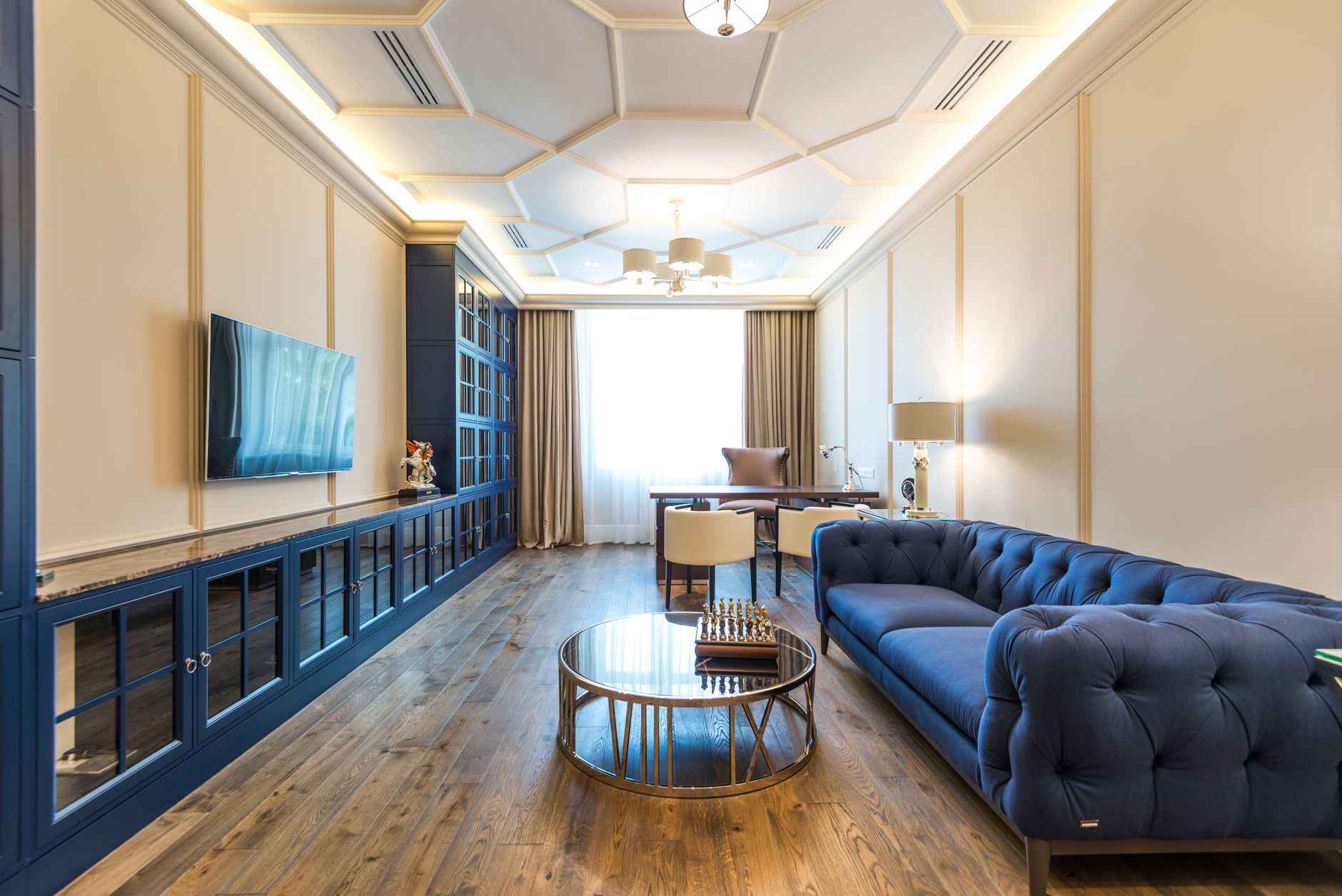
In Marin’s custom homes — open-plan Mill Valley living spaces, Tiburon rooms built around a bay view, layered Ross interiors — a single room often has four or five separate lighting layers. Scenes are what make those layers usable day to day. Rather than a bank of switches nobody but the designer understands, the family gets a few clearly labeled buttons that just work. For the broader system that makes this possible, our guide to Lutron lighting control covers the platform side.
A lighting control system is the networked platform of dimmers, keypads, and fixtures that lets lights act together, making scenes and presets possible.
How do lighting presets change daily life?
Lighting presets change daily life by replacing dozens of small adjustments with a handful of one-press moments that match your routine. A morning scene brings the kitchen and breakfast area up to a bright, even light. A cooking scene lights the work surfaces without glare. A dinner scene warms and lowers the whole space. A late-night scene leaves just enough of a soft path to move safely without flooding the house with light. Each is a button, and each is tuned once to be right every time.
The convenience compounds in a large home. A single “Goodnight” or “Away” scene can shut down the whole house’s lighting at once — no walking room to room flipping switches, no lights left on in the guest wing. Some homeowners add an “Entertaining” scene for the main living areas and a “Path” scene that lights a safe route to a child’s room. For homes that want scenes to extend outdoors, our guide to landscape and outdoor lighting shows how exterior layers join the same system.
The scenes most homes actually use
Most homes settle into a small set of scenes they use constantly rather than a huge menu they forget. Morning, cooking, dinner, entertaining, movie, and goodnight cover the vast majority of daily life. The art of programming is restraint — building the few scenes a family will genuinely reach for and labeling them plainly, rather than overwhelming a keypad with options. A good lighting programmer starts by asking how you actually move through your day, then designs the scenes around those real moments.
The luxury isn't the technology. It's pressing one button and having the whole room become exactly right.— Towery Electric
How are scenes different from simple dimmers?
The difference between scenes and simple dimmers is coordination: a dimmer controls one circuit’s brightness, while a scene sets many fixtures to different levels at once with a single press. A room full of individual dimmers still requires you to adjust each one to get the look you want, every time. A scene remembers that look and recreates it instantly across every fixture. Both have their place — dimmers for a simple room, scenes for a layered one — and the table below sorts out where each fits.
Scenes also travel. Because they live in the control system rather than in a single wall switch, the same scene can be triggered from a keypad by the door, a bedside button, a phone, or a schedule. That’s the leap from controlling a light to orchestrating a room. If your rooms currently run on individual dimmers and you’re wondering whether to step up, our guide to dimmer switch upgrades covers the foundation that scenes build on.
| Feature | Simple dimmer | Lighting scene |
|---|---|---|
| Controls | One circuit's brightness | Many fixtures at once |
| Setting the look | Adjust each fixture every time | One press recalls a saved look |
| Triggered from | The wall switch | Keypads, bedside, phone, or a schedule |
| Best for | A simple, single-layer room | Layered, open-plan, or custom spaces |
| Whole-home actions | Not really | Goodnight or Away shuts down everything at once |
How are lighting scenes set up and programmed?
Setting up lighting scenes is a design-and-programming process an electrician handles after the control system is installed, tuning each scene to how you use the space. It starts with a conversation about your routine, moves through installing the control hardware and keypads, and ends with programming and refining the scenes until they feel right. The technology is only as good as the programming, which is why this step is collaborative — often with your architect or lighting designer in the room. Our guide to working with your designer on lighting plans covers that partnership.
- Understand the routine. We talk through how each room is used across the day so the scenes match real life, not a template.
- Install the control system. The dimmers, keypads, and control hardware go in, tying the room’s lighting layers together.
- Program the scenes. We set each fixture’s level for every scene — morning, dinner, movie, goodnight — and assign them to labeled buttons.
- Walk through & refine. We run each scene with you and fine-tune levels until they feel exactly right in your space.
- Label & hand off. Keypads are clearly labeled so anyone in the home can use them, and we show you how to tweak a scene later.
When it’s done, the home lights itself for the moment — a press for dinner, a press for goodnight, and everything in between handled without a second thought. What you should expect from a good electrician and programmer is scenes built around how you actually live, plainly labeled keypads, and a system you can adjust rather than one you’re locked out of.

Ready to trade a wall of switches for a single, perfect press?
Request Your EstimateWhich homes get the most from lighting scenes?
The homes that get the most from lighting scenes are those with layered lighting — multiple fixture types in a room — and open floor plans where one space flows into the next. A custom Marin home with recessed cans, pendants, accent lighting, and cove lighting in a single great room is the ideal candidate, because that’s exactly where individual switches become unmanageable. Homes designed around views, where interior light needs to balance against the glass at dusk, benefit too. So do larger homes where whole-home scenes save real steps.
When scenes are worth the investment
Scenes earn their place when a home’s lighting is complex enough that controlling it manually is genuinely tedious — or when the design intent depends on getting the layers balanced just so. In a simple room with one or two fixtures, a good dimmer is plenty. In a layered, architectural space, scenes are what let the lighting design actually be used as intended rather than admired once and then left on full. For homeowners planning a custom build or remodel, designing scenes in from the start is cleaner than retrofitting later.
What are the common mistakes with lighting scenes?
The most common mistake is over-programming — building so many scenes that the keypad becomes a puzzle nobody in the family wants to solve. The second is poor labeling, which turns an elegant system into a guessing game. The goal is intuitive, everyday usability, which aligns with the human-centered lighting principles that organizations like the Illuminating Engineering Society promote: lighting should serve how people actually live in a space. A technically impressive system that the household finds confusing has missed the point entirely.
How to avoid them
Avoid these pitfalls by keeping the scene set small and purposeful, labeling keypads in plain language, and having the system programmed by someone who asks how you live before they touch the software. Make sure you’re left able to adjust a scene yourself rather than dependent on a call for every tweak. If scenes are part of a larger control vision, our guide to Lutron lighting control covers building the system that carries them well.
Key Terms
- Lighting scene
- A saved combination of brightness levels across multiple fixtures, recalled with one button to set a room's lighting at once.
- Preset
- A stored lighting configuration — like a morning or dinner scene — assigned to a button for instant recall.
- Keypad
- A wall control with labeled buttons that trigger scenes, replacing a bank of individual switches.
- Lighting layers
- The distinct types of light in a room — ambient, task, accent, decorative — that scenes coordinate together.
About the Author

Founder of Healthcare Marketing Group and author of The Ultimate Guide to Digital Marketing. Previously led a digital marketing company with 8,000+ clients. Writes on local-service SEO and E-E-A-T content strategy.
Reviewed By

Alex founded Towery Electric in Novato in 2014 and has programmed lighting scenes for custom homes across Marin, often alongside architects and designers. Reviewed this article for technical accuracy on Sep 26, 2026, 2026.
“The best scene system is the one a family actually uses. I’d rather program four scenes they press every day than twenty they can’t remember. Simple and labeled beats clever and confusing every time.”
— Alex Towery, Licensed Electrical Contractor
How We Ensure Accuracy
Sources
- Illuminating Engineering Society. “Lighting Design & Human-Centered Lighting.” ies.org
- U.S. Department of Energy. “Lighting Controls.” energy.gov
- Lutron Electronics. “Whole-Home Lighting Control & Scenes.” lutron.com
- National Fire Protection Association. “NFPA 70 — National Electrical Code.” nfpa.org
- California Contractors State License Board. “License Detail — Towery Electric, Inc. (#989290).” cslb.ca.gov
Frequently Asked Questions
What is a lighting scene?
A lighting scene is a saved combination of brightness levels across multiple fixtures that you recall with a single button. Instead of adjusting each light individually, one press sets the whole room — the recessed cans, pendants, and accent lights all fade to their assigned levels at once. Scenes run on a lighting control system that ties fixtures and keypads together. They’re the core of what makes a custom home’s layered lighting easy to live with day to day.
How are lighting scenes different from dimmers?
A dimmer controls one circuit’s brightness; a scene coordinates many fixtures at once. With individual dimmers, you still adjust each light every time you want a particular look. A scene remembers that look and recreates it across every fixture with one press. Scenes also live in the control system, so they can be triggered from keypads, bedside buttons, a phone, or a schedule — not just the wall switch. Dimmers suit simple rooms; scenes suit layered ones.
How many lighting scenes should a home have?
Fewer than most people expect. Most homes settle into a handful they use constantly — morning, cooking, dinner, entertaining, movie, and goodnight cover the majority of daily life. Over-programming a keypad with too many options makes it confusing and defeats the purpose. Good programming is about restraint: building the few scenes a family will genuinely reach for and labeling them plainly. You can always add or refine scenes later as you learn what you actually use.
Do I need a whole control system for scenes?
Yes — scenes require a lighting control system that connects your fixtures, dimmers, and keypads so they can act together. A single standalone dimmer can’t create a scene because it only governs one circuit. The control system is what stores each scene’s levels and fades every fixture at once. The good news is these systems scale, so you can start with key rooms and expand. An electrician designs the system around the rooms where scenes add the most.
Can I change a scene after it's programmed?
Yes, and you should be able to easily. A well-set-up system lets you fine-tune a scene’s levels yourself — brightening the dinner scene a touch or dimming the morning one — without a service call for every tweak. During installation, your electrician should walk you through how to adjust scenes and label the keypads clearly. If a system leaves you locked out of your own lighting, that’s a setup problem worth raising before the project wraps.
Editor’s Summary
A lighting scene is a saved snapshot of light levels across many fixtures, recalled with one button — morning, dinner, movie, goodnight, each a single press. In Marin’s layered custom homes, scenes are what make a room’s lighting design actually usable day to day. The value isn’t the hardware; it’s the programming, tuned to how a family really lives and labeled plainly. Kept simple and purposeful, scenes turn a wall of switches into a home that lights itself correctly for the moment.